
Twisted Multifilament PP Yarn
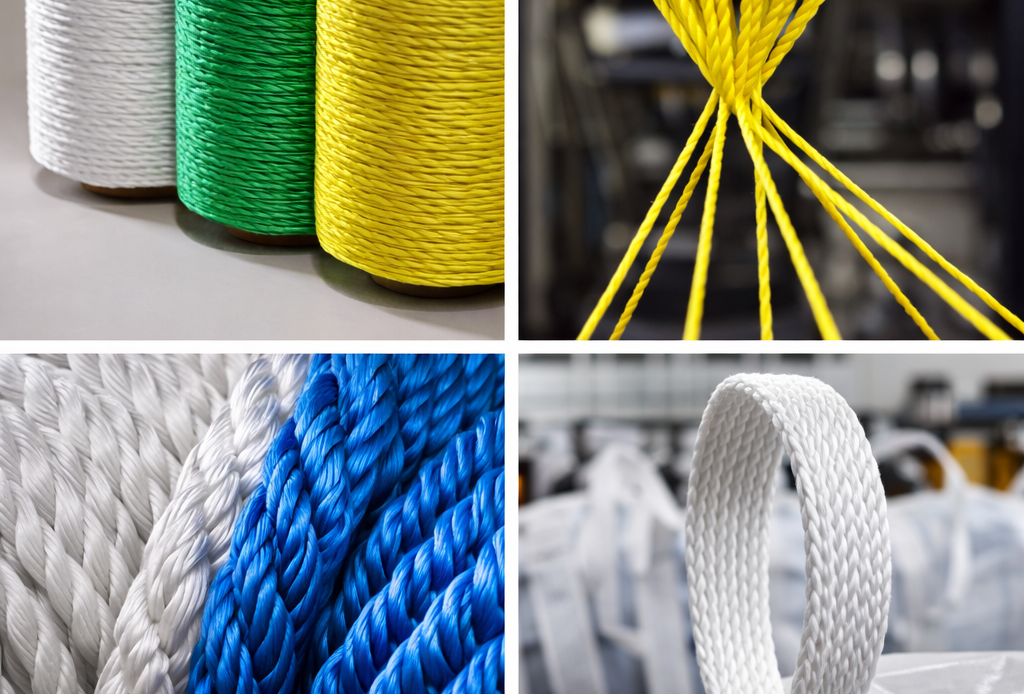
Twisted Multifilament Polypropylene (PP) Yarn
Twisted multifilament polypropylene (PP) yarn combines multiple fine filaments into a single strong yarn. Manufacturers twist these filaments to improve cohesion and structure. As a result, the yarn delivers higher strength and better durability.
Manufacturers produce this yarn using high-quality polypropylene material. This process increases abrasion resistance and improves performance. Therefore, the yarn performs reliably in demanding industrial applications.
In addition, the twisting process enhances flexibility and handling. It also reduces filament separation and improves consistency. Because of this structure, the yarn offers superior performance compared to an untwisted multifilament yarn.
This yarn suits applications such as ropes, webbings, FIBC bags, geotextiles, and industrial fabrics. Overall, it improves strength, extends product life, and supports efficient industrial use.
Manufacturing Process
The production of twisted multifilament PP yarn involves several key stages:
-
Extrusion: Polypropylene polymer is melted and extruded through spinnerets to create multiple continuous filaments.
-
Drawing: The filaments are stretched to align their molecular structure, which significantly improves strength and durability.
-
Twisting: The filaments are twisted together using S-twist or Z-twist methods to form a cohesive yarn.
-
Winding: The finished yarn is wound onto cones or bobbins for easy handling, storage, and further processing.
Typical Specifications
Common specifications for twisted multifilament PP yarn include:
-
Denier Range: Approximately 300D to 5000D (higher deniers available upon request)
-
Twist Levels: Low, medium, or high twist depending on application requirements
-
Finishes: Raw finish, UV-stabilized, anti-slip, or color masterbatch options
Key Properties
Twisted multifilament PP yarn offers several performance advantages:
-
High tensile strength and durability
-
Lightweight due to low-density polypropylene
-
Excellent abrasion resistance
-
Strong resistance to moisture and chemicals
-
Improved knot strength and cohesion because of the twist
-
Customizable options such as denier, twist level (TPM/TPI), color, and UV stabilization
Applications
Twisted multifilament PP yarn is widely used in various industrial and technical textile applications, including:
-
Woven fabrics and webbings
-
FIBC components such as lifting loops, ties, and sewing thread alternatives
-
Ropes, cords, and twines
-
Netting and mesh fabrics, including ventilated and firewood bags
-
Geotextiles and other industrial textile products
Looking for High-Quality Twisted Multifilament Polypropylene (PP) Yarn?
Contact Simplex Chemopack Private Limited at +91 91686 49620 or email us today for customized PP yarn solutions.
Common Questions About Twisted Multifilament PP Yarn:
What is twisted multifilament PP yarn?
Twisted multifilament PP yarn is produced by combining multiple fine polypropylene filaments into a single strong yarn through a twisting process. This twisting improves cohesion, structure, strength, and durability compared to untwisted multifilament yarn. The result is a yarn that performs reliably in demanding industrial applications.
What are the key properties of twisted multifilament PP yarn?
Twisted multifilament PP yarn offers high tensile strength and durability, excellent abrasion resistance, strong resistance to moisture and chemicals, improved knot strength due to the twist, and lightweight construction from low-density polypropylene. It is also customizable in denier, twist level, color, and UV stabilization.
What are twisted multifilament PP yarn used for?
Twisted multifilament PP yarn is widely used in woven fabrics and webbings, FIBC components such as lifting loops and ties, ropes, cords and twines, netting and mesh fabrics including ventilated and firewood bags, and geotextiles and other industrial textile products.
What specifications are available for twisted multifilament PP yarn?
Twisted multifilament PP yarn is available in a denier range of approximately 300D to 5000D with higher deniers available on request. Twist levels include low, medium, and high twist depending on application requirements. Finish options include raw finish, UV-stabilized, anti-slip, and color masterbatch.